Ask four different sources what a home in Tierra Verde costs this year and you will get four different answers, and none of them will be lying to you. In January 2026, Redfin's own market page put the median sale price at $1.1 million, with homes sitting for 226 days on average, up from just 20 days the year before. By March, a separate roundup of Zillow, Redfin, and Realtor.com data placed the median closer to $789,000, with homes moving in 74 days and selling at 95 percent of list price. By April, another portal had the median at $890,000 with a 96-day average. By late August, yet another showed a median list price of $830,000.
None of those numbers is wrong. They all relate to the same small island but use different measures and time periods. On an island this size, a sale-price median is not a stable read on value; it is a snapshot of the homes that happened to close during the period measured.
The Same Island, Different Prices
| Time Period | Source | Reported Median | Days on Market |
|---|---|---|---|
| January 2026 | Redfin (island-wide) | $1.1M | 226 |
| March 2026 | Zillow / Redfin / Realtor.com composite | $784K-$792K | 74 |
| April 2026 | Movoto | $890K | 96 |
| May 2026 | Redfin (waterfront listings only) | $819K | 114 |
| Late August 2026 | ezHomeSearch | $830K | 98 |
| September 16, 2026 | MLS activity count | 73 active listings island-wide | n/a |
Look at the spread between January and March: a swing of more than $300,000 in the reported median over two months, alongside a days-on-market figure that dropped from 226 to 74. That is not a market correcting itself. That is a market too small to produce a median worth quoting on its own.
Why Eight Sales a Month Can Tell Four Different Stories
One tracker put the trailing 12-month sales count for Tierra Verde at 99 homes, which works out to roughly 8 closings a month across the entire island, single-family homes, condos, and townhomes combined. Another portal, covering the same general window, listed 83 sales in a single month, a number nearly ten times the pace the trailing-year figure implies. Both can be technically accurate and still describe two different slices of the market. That is the tell. When a monthly count depends on exactly which properties, which price tiers, and which reporting boundary a given portal used, the number stops functioning as a fact you can compare month to month and starts functioning as a description of that portal's methodology.
Here is what that means in practice. If eight homes close in a given month and six of them sit in the $700,000 to $900,000 range while one is a $2.8 million estate on open water, that single closing drags the median for the month upward by tens of thousands of dollars, sometimes more, without a single other property changing hands for a different price than it would have a month earlier. Reverse the mix the following month, no luxury closing, a couple of smaller condos instead, and the median falls back just as fast. Nothing about the underlying market moved. The sample size did.
This is worth knowing before you anchor an offer, or a listing price, to whatever median a search turns up. On a market this thin, the number that matters is not the headline median. It is what specific comparable properties, on the same type of water access, actually closed for.
What Actually Makes a Tierra Verde Dock Valuable
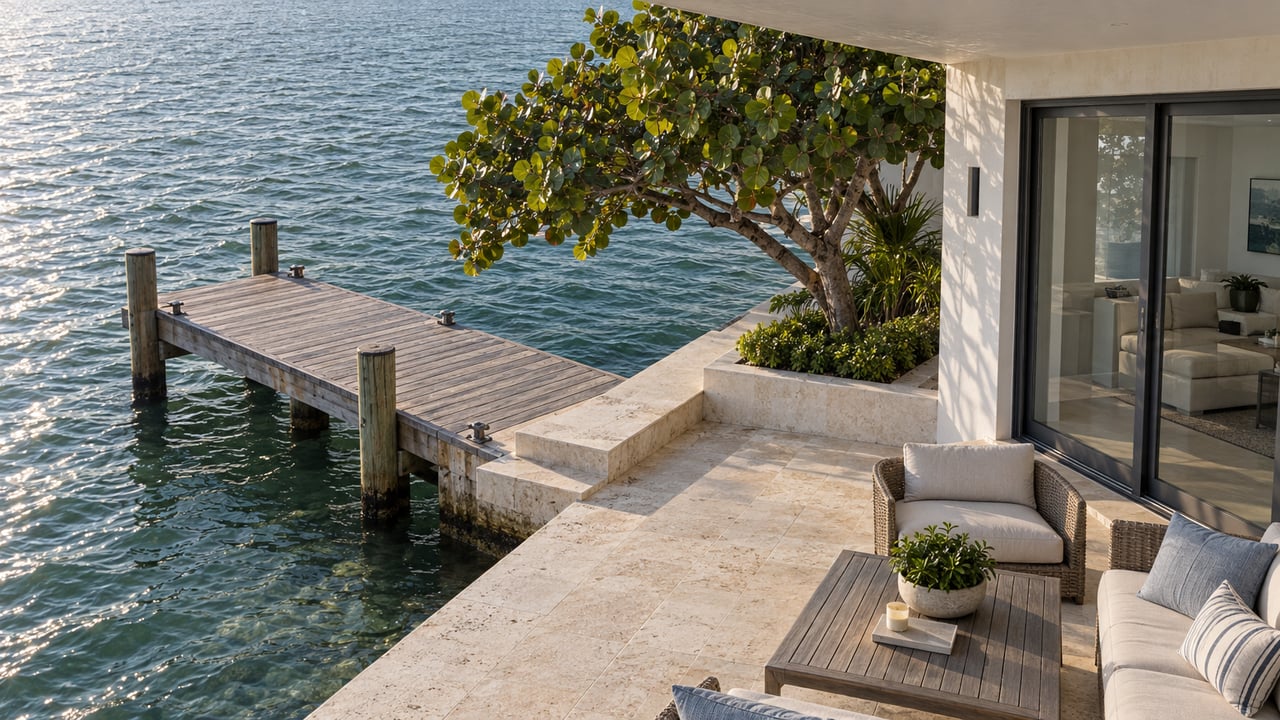
If the median is unreliable, the more useful question is what is actually scarce here, and the answer is not water frontage in general. Plenty of Tampa Bay communities sit on canals. What sets Tierra Verde apart, and what shows up again and again in listing language for its Grand Canal properties, is the absence of fixed bridges between the dock and open water. Listings for the island describe direct, no-bridge access to the Gulf of Mexico, the Pass-a-Grille Channel, and the Intracoastal Waterway, and that phrasing is not decorative. It is the actual product being sold.
In boating terms this is called sailboat water: canal access with no fixed bridge, or only a bridge with enough vertical clearance that a taller vessel or a mast never has to duck under it. That distinction matters enormously if you own, or plan to own, anything with real height above the waterline. A canal home two miles away, in a different Tampa Bay neighborhood, can be marketed with the same "waterfront" label and still box a boat in behind a low fixed span.
The contrast points to the actual scarcity in Tierra Verde: not water frontage as a category, which exists all over Tampa Bay, but frontage with a genuinely unobstructed route out. It is also the reason the island supports a narrower, more specialized buyer pool than the median price alone would suggest, and narrower buyer pools tend to produce exactly the kind of longer, more variable time on market this data shows.
The Costs That Don't Show Up in the List Price
None of that access comes free of diligence. A few things worth understanding before an offer goes in, regardless of what number the listing quotes.
Most Florida seawalls were built 30 to 50 years ago, meaning a meaningful share of them are at or past their original design life right now. A seawall inspection before closing is not optional caution. It is the difference between a dock that functions and a five- or six-figure repair bill in year one.
Flood insurance is another point to review before an offer.
Dock permits are another part of the due diligence to do before an offer. An existing dock's permit history and permitted footprint are worth verifying.
Questions Worth Asking Before You Write an Offer
A few direct questions do more work here than any headline statistic.
Does this specific canal segment have a fixed bridge between the dock and open water, and if so, what is its clearance. Do not assume "waterfront" answers this. Ask for the DEP and Army Corps permit numbers on the existing dock, and confirm the permitted footprint matches what is actually built, since county property appraiser records can be checked against it. Ask when the seawall was last inspected and by whom, and request that inspection report rather than taking a listing's word for its condition. Ask the seller directly whether the existing homeowners or flood policy covers the dock and seawall, or only the structure of the house. And before assuming a grandfathered dock can be enlarged or rebuilt to a different size, ask whether current DEP rules would even allow it at that location today.
None of these questions show up in a median price, and none of them show up on a listing sheet. They show up in the walkthrough, the survey, and the permit file, which is exactly where they need to be resolved before a number gets written into a contract.
If you are weighing a Tierra Verde purchase or preparing to list on the island, the numbers you find online are a starting point, not an answer. The Orns Solution works this market closely enough to know which canal segments actually clear to open water, what a specific seawall's age means for your first year of ownership, and how to read a comparable sale for what it actually tells you rather than what a portal's monthly average implies. Reach out before you anchor an offer to a number that might not hold past this month's closings.
This article is general information, not legal, tax or financial advice. Consult a qualified professional about your situation.